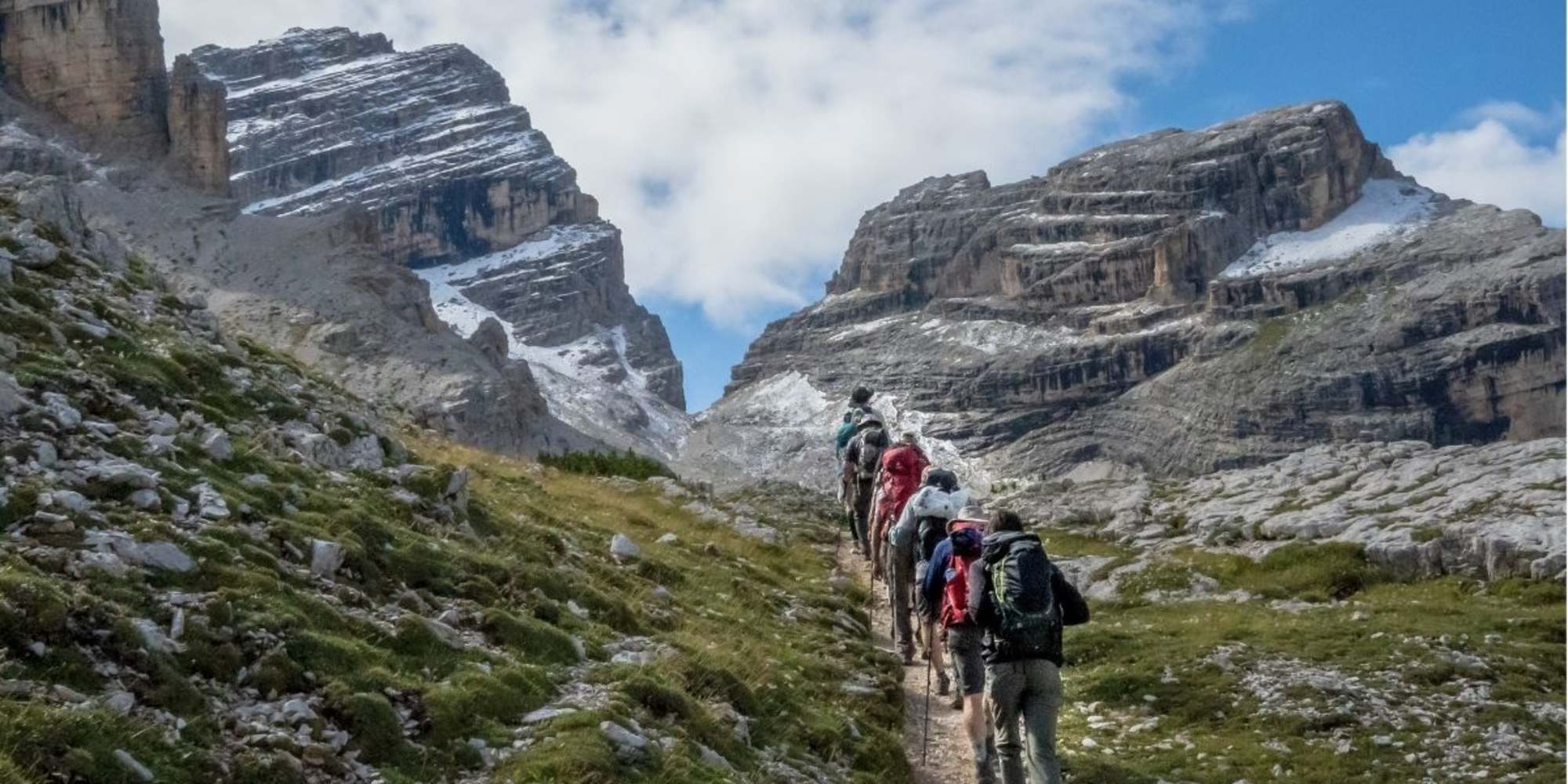
Choosing when to hike the Dolomites isn’t just about finding the warmest weather. It’s about knowing when the high trails have shaken off winter, when the rifugios are open and lively, when the valleys are blooming, and when the jagged limestone peaks feel at their most welcoming.
The best time to visit the Dolomites for hiking is late June through September. During these months, most trails are more accessible, mountain huts are usually open, and the longer days give you room to walk at a comfortable pace, pause for a proper alpine lunch, and still have time to soak up the views. For many hikers, September is the sweet spot: cooler mornings, quieter paths, clearer light, and a calmer feel after the busiest summer weeks.
That said, the Dolomites like to keep a little mountain mystery in the mix. Snow can linger on higher passes into June. Summer afternoons can bring fast-moving storms. By October, the larches begin to turn gold, but rifugios, lifts, and some services may start closing for the season.
That’s why the “best” time depends on the kind of hiking experience you’re hoping for. Do you want wildflowers and long summer days? Quieter trails and crisp alpine air? Golden autumn color with a little more flexibility built in?
Here’s how to choose the right season for your Dolomites adventure.
Best time to visit the Dolomites at a glance
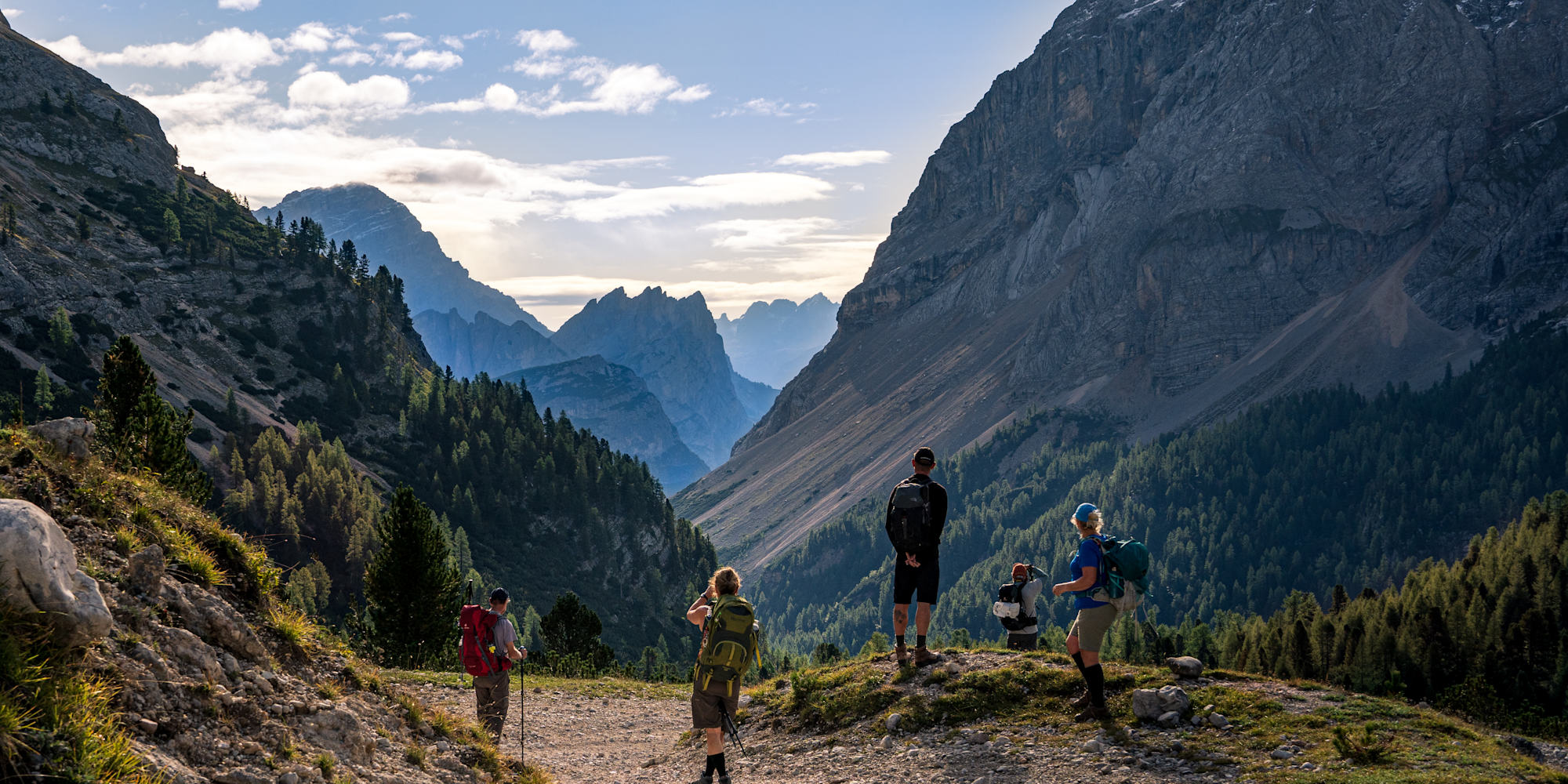
For most active travelers, the best months to visit the Dolomites are late June, July, August, and September. This is the main hiking season, when high mountain routes are more likely to be clear, cable cars and rifugios are generally operating, and towns such as Cortina d’Ampezzo, Dobbiaco, and Alta Badia are lively with summer energy.
Here’s the simple version...
Travel window: LATE JUNE
Best for: Wildflowers, quieter trails, early-season hiking
What to know: Some higher trails may still hold snow
Travel window: JULY
Best for: Long days, open services, classic hiking conditions
What to know: Popular trails begin to get busier
Travel window: AUGUST
Best for: Warm weather, full summer atmosphere
What to know: Peak European holiday season, so book early
Travel window: SEPTEMBER
Best for: Hiking, photography, fewer crowds, cooler mornings
What to know: A favorite month for many hikers
Travel window: OCTOBER
Best for: Autumn color and quieter valleys
What to know: Services begin closing and weather turns colder
Travel window: DECEMBER - MARCH
Best for: Skiing and winter scenery
What to know: Not ideal for regular hiking
Travel window: APRIL - MAY
Best for: Quiet towns and lower valley walks
What to know: High trails are often snowy, muddy, or closed
For an Active Adventures-style hiking trip, July through September offers the most reliable balance of scenery, access, and guest comfort. You’ll still want layers in your daypack, but you’re more likely to spend your days walking beneath pale limestone towers, crossing open meadows, and sitting down to a well-earned mountain lunch with the group.
What the Dolomites are like by season
Summer: late June to August
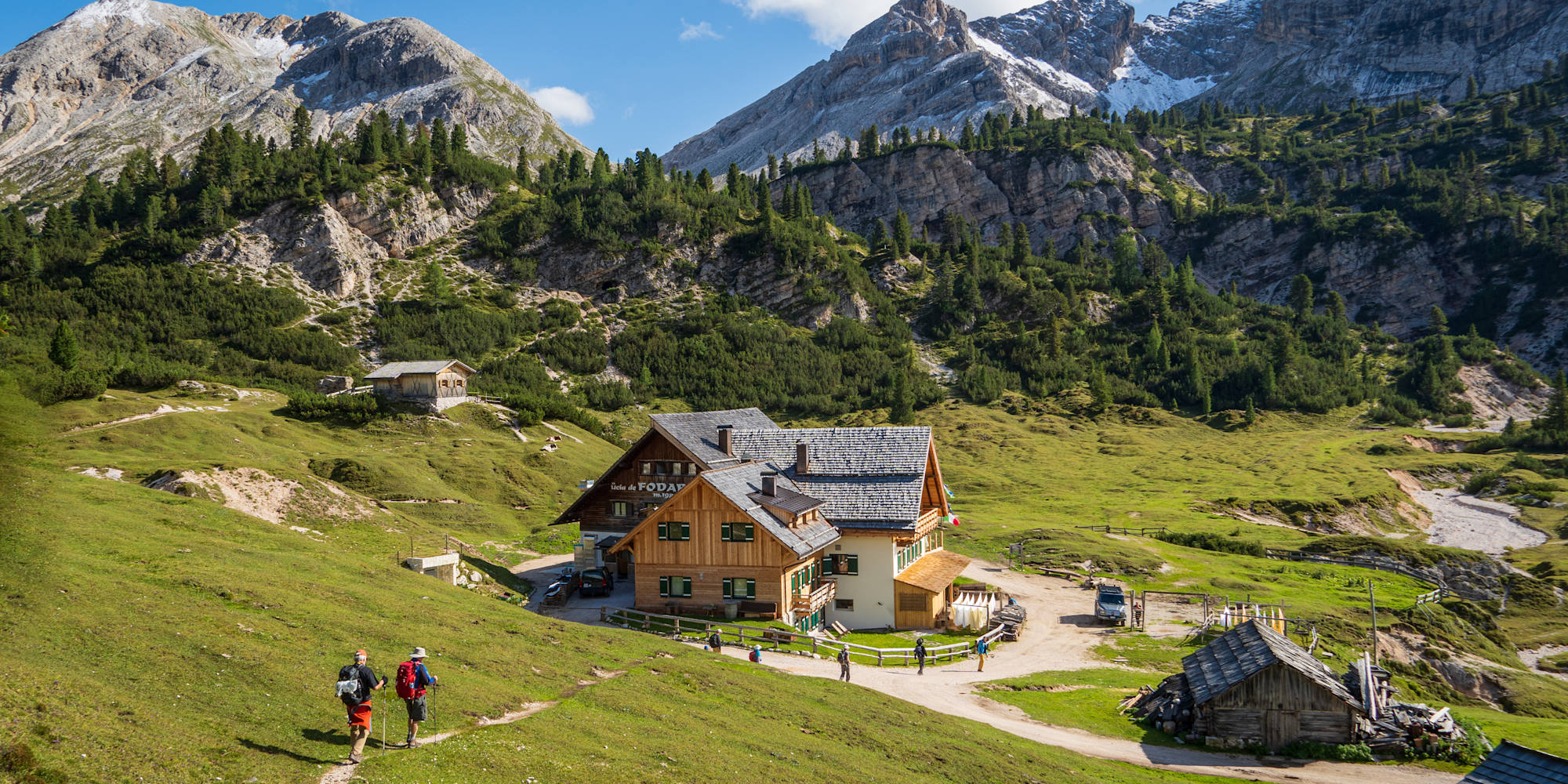
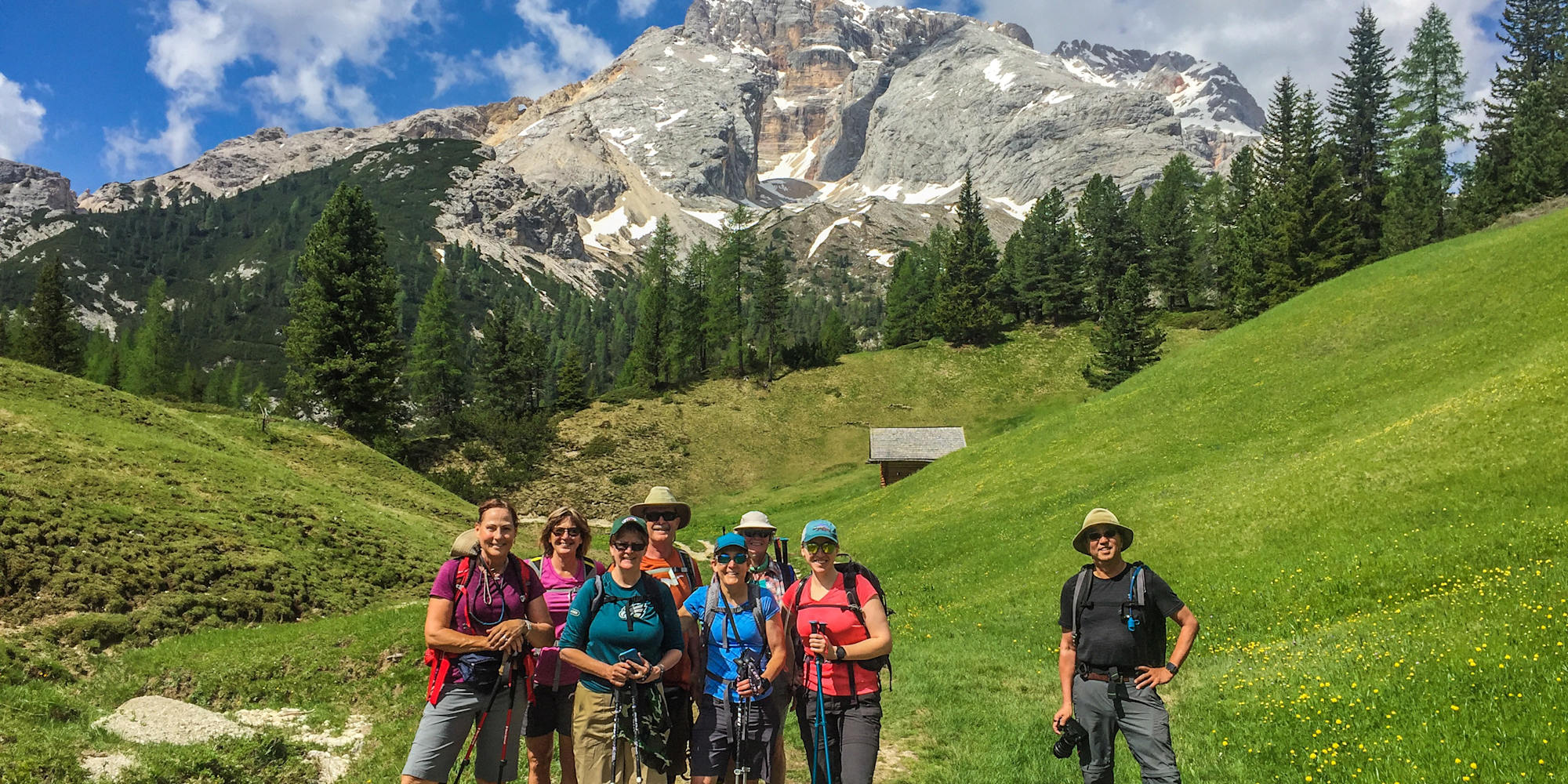
Summer is when the Dolomites truly come alive for hikers. Meadows turn green, wildflowers brighten the trails, and rifugios open their doors to walkers arriving hungry from the track. You’ll hear cowbells in the valleys, boots on gravel paths, and that happy clatter of plates when lunch appears at just the right moment.
Late June can be wonderful if you like a slightly quieter start to the season. The valleys feel fresh, the days are long, and the mountains are waking up after winter. Higher routes may still have snow patches, so flexibility matters.
July brings more dependable hiking conditions. Trails are generally more accessible, services are open, and the Dolomites feel full of life without quite reaching the busiest stretch of the season.
August is beautiful but busy. This is peak holiday time across much of Europe, so popular places such as Tre Cime di Lavaredo, Lago di Braies, and Seceda can feel crowded. It’s still a great time to visit, especially on a guided trip where logistics are handled for you, but early starts and well-planned routes make all the difference.
Autumn: September to October
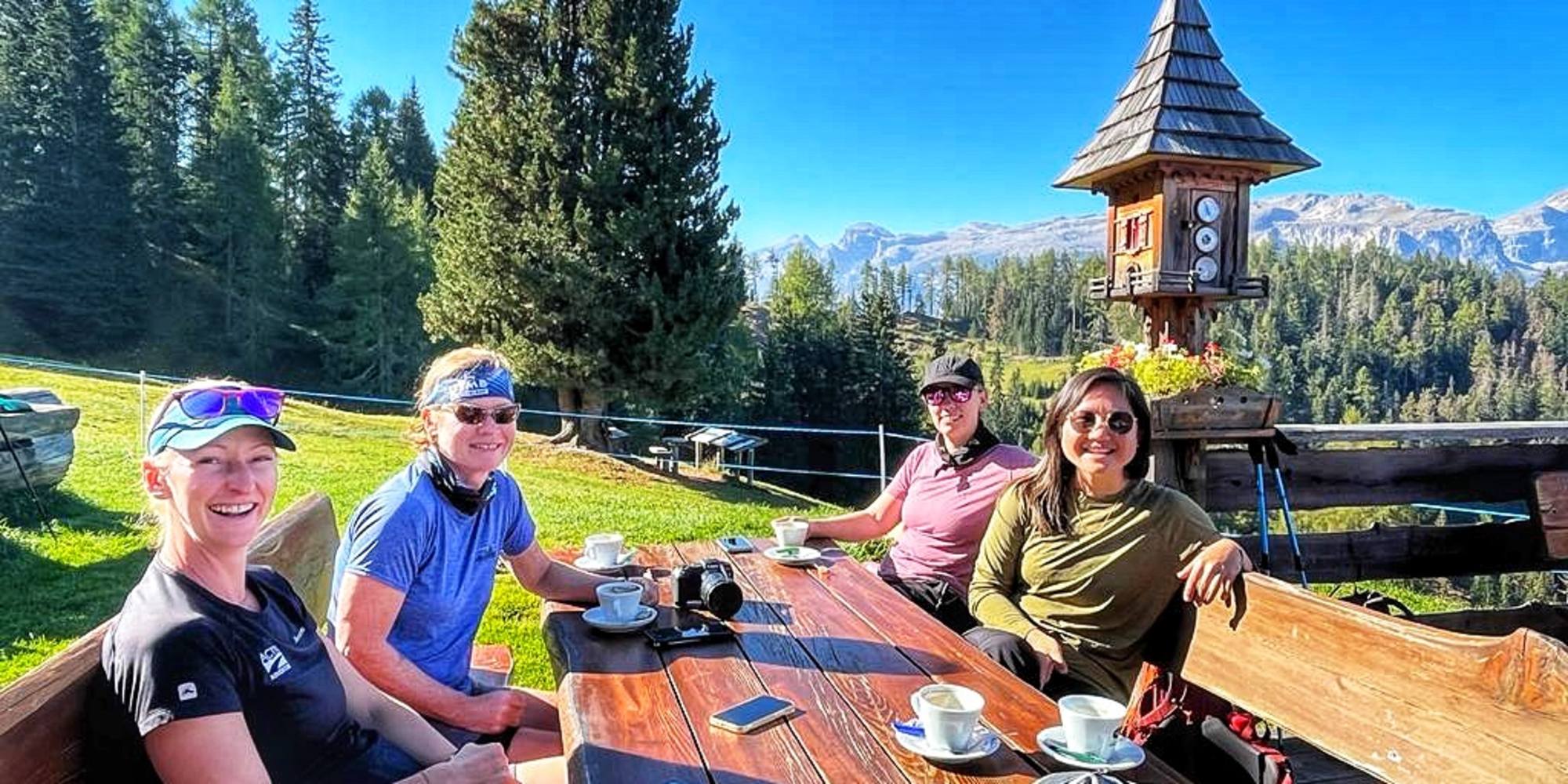
September is often the best month to visit the Dolomites if hiking is your main reason for going. The trails are still open, the summer crowds ease, and the mornings begin with that crisp, clean mountain air that makes coffee taste better than usual. The light softens, the pace settles, and the peaks feel a little more spacious.
October can be beautiful too, especially when the larches turn gold. But it’s also more changeable. Days are shorter, high trails can be cold, and some rifugios, cable cars, and seasonal services begin to close. For independent travelers, this takes extra planning. For guided travelers, it’s a reminder that timing and local knowledge really matter.
Winter: December to March
Winter belongs to skiers, snowshoers, and those who love the hush of a snow-covered mountain village. The Dolomiti Superski area connects a vast network of ski resorts across the region, making winter a major season for snow-based travel.
For hiking, though, winter is not the season to expect open summer trails. Snow, ice, avalanche risk, and limited access change the experience completely. It can be magical, but it’s a different kind of trip.
Spring: April to May
Spring sounds tempting, but for hiking it can be tricky. The valleys may be green, but the mountains are still thawing. Snowmelt, mud, unstable weather, and seasonal closures can make high routes difficult or inaccessible. It’s a peaceful time, but not the best choice if your dream is full days on the Dolomites’ classic trails.
Best time to hike in the Dolomites
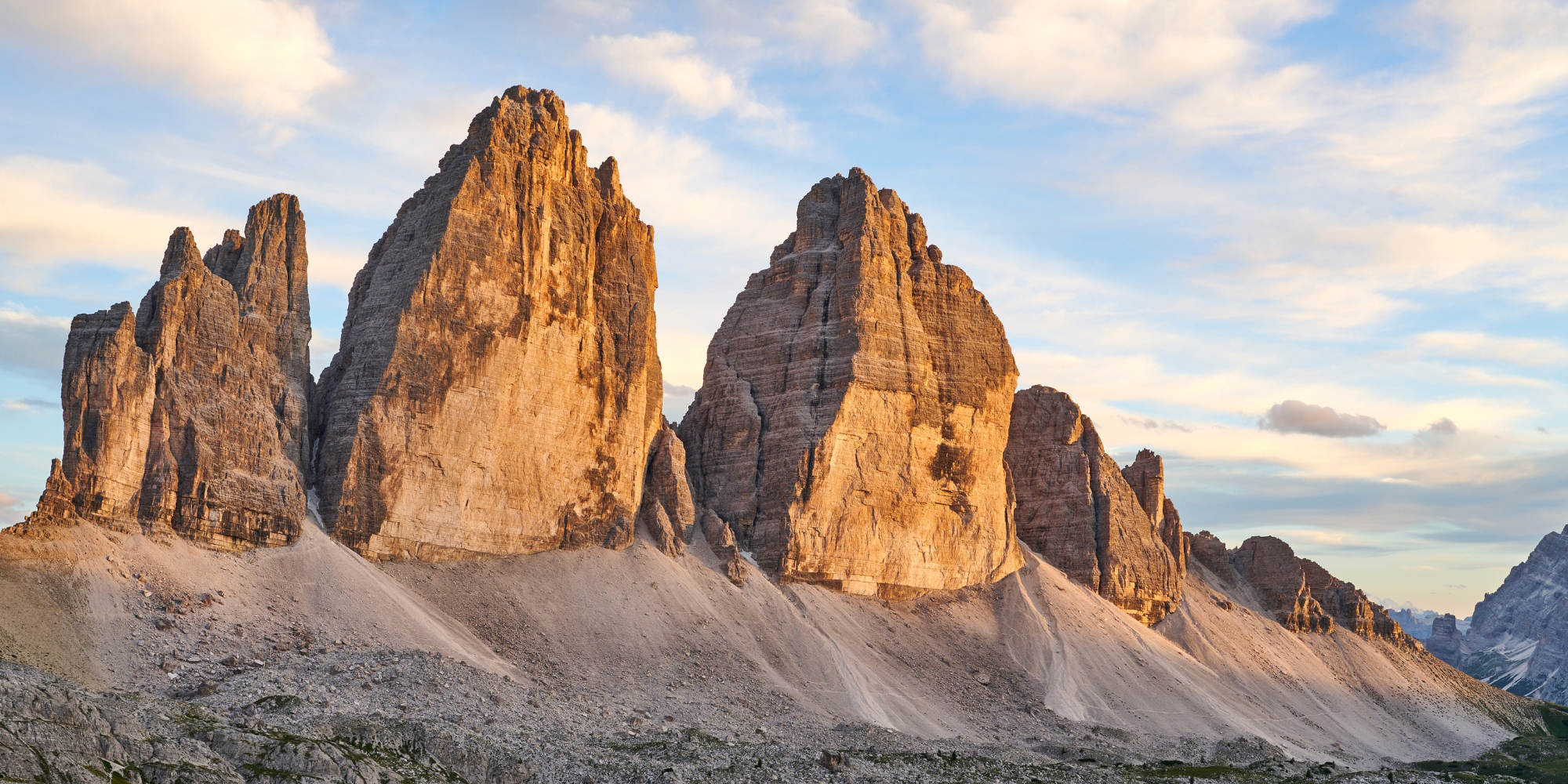
The best time to hike in the Dolomites is late June through September, with September standing out as the most rewarding month for many travelers.
By late June, the hiking season is beginning to open properly. By July and August, the region is in full summer mode. By September, the trails usually still feel accessible, but the busiest part of the season has passed.
For hikers, the timing matters because the Dolomites are high, rugged, and alpine. The UNESCO World Heritage Centre describes the Dolomites as a northern Italian Alpine mountain range with 18 peaks rising above 3,000 meters, marked by vertical walls, cliffs, and deep valleys. That dramatic terrain is exactly what makes hiking here so special, and exactly why you want the right season beneath your boots.
On a good summer hiking day, you might start with cool air in the valley, climb steadily through forest and pasture, then step out beneath pale rock towers that seem almost too sharp to be real. Lunch might be at a rifugio, where the plates are hearty, the views are generous, and there’s time to let your legs rest before the afternoon walk.
A few practical notes:
- Start early in July and August. You’ll enjoy cooler temperatures and quieter trails.
- Pack layers even in summer. Mountain weather can shift quickly.
- Expect variety underfoot. Trails can include gravel paths, rocky sections, forest tracks, meadow crossings, and steeper alpine terrain.
- Book early for peak season. Accommodation and popular routes can fill well in advance.
- Let local guides smooth the way. In a region where weather, access, and trail conditions can change, having someone who knows the area is a real gift.
For travelers who want a balance of activity and comfort, a guided Dolomites hiking adventure takes care of the moving parts. The route planning, accommodation, local insight, and those small daily details that help you relax into the experience.
Choosing the right month for your travel style
The best month for you depends on what you want most from the trip.
Choose late June if you want wildflowers and quieter trails
Late June is a lovely option for travelers who don’t mind a little early-season uncertainty. The meadows are fresh, the air feels bright, and the trails are less crowded than peak summer. You may need to be flexible around lingering snow on higher routes, but the reward is a softer, quieter version of the Dolomites.
Choose July if you want classic summer hiking
July is a strong all-round choice. You’ll have long days, more open services, and warm conditions for hiking. It’s a wonderful time for first-time visitors who want the full summer Dolomites experience: green valleys, open trails, rifugio lunches, and plenty of daylight to enjoy it all.
Choose August if it’s your only travel window
August is busy, but that doesn’t mean you should rule it out. With good planning, it can still be a beautiful time to hike. The key is to book early, avoid the busiest trailheads at peak times, and lean on local knowledge where possible.
Choose September if you want the sweet spot
September is the month many hikers dream about. The trails are still inviting, the days are usually comfortable, and the summer rush has eased. Mornings are cooler, evenings feel calm, and the mountains have a golden edge that makes every view linger a little longer.
Choose October if you’re flexible and love autumn
October is for travelers who don’t mind a bit of unpredictability. The autumn colors can be stunning, especially the golden larches, but services may be limited and weather can change quickly. It’s less suitable for a first-time hiking trip unless you’re comfortable adapting your plans.
Dolomites travel FAQs
What is the best month to visit the Dolomites?
For hiking, September is often the best month to visit the Dolomites. Trails are generally still open, the busiest summer crowds have eased, and the cooler mornings make longer walks more comfortable. July is also excellent if you want full summer energy and long daylight hours.
When is hiking season in the Dolomites?
The main hiking season runs from late June through September. Some lower trails may be accessible outside this window, but high alpine routes often depend on snow conditions, weather, and seasonal services.
Is July or September better for the Dolomites?
Both are excellent. Choose July for long days, wildflowers, and lively summer atmosphere. Choose September for quieter trails, cooler temperatures, and softer light. For many active travelers, September has the edge.
Is August too crowded in the Dolomites?
August is the busiest summer month, especially around famous sights and trailheads. It can still be a rewarding time to visit, but you’ll want to plan ahead, start early, and avoid relying on last-minute bookings.
Can you hike in the Dolomites in May?
May is usually too early for classic high-altitude hiking. Lower valleys may be pleasant, but many mountain trails can still be snowy, muddy, or closed. If hiking is your main focus, late June onwards is a safer choice.
Is October a good time to visit the Dolomites?
October can be beautiful, especially for autumn colors, but it’s less predictable. Some rifugios and lifts close, days are shorter, and early snow is possible. It suits flexible travelers more than those wanting a full summer hiking experience.
What should I pack for hiking in the Dolomites?
Bring comfortable hiking boots, breathable layers, a waterproof jacket, sun protection, a warm layer for mornings and evenings, and a daypack with water and snacks. Even in summer, mountain weather can surprise you.
Ready to see the Dolomites at their best? On our Dolomites Adventure, you’ll hike among limestone peaks, wander through mountain villages, share meals in welcoming rifugios, and let expert local guides take care of the details along the way. Explore the trip, check upcoming dates, and picture yourself on the trail! Your boots will be dusty, lungs full of alpine air, and the next view waiting just around the corner.
Written by Nicole McLean, part of the Active Adventures team, with insight from a company that’s spent 30+ years creating guided adventure trips around the world.
Still wondering whether the Dolomites Adventure is right for you? We’re here to help. Give us a call or send us an email, and we’ll happily talk you through the trails, the pace, the little details, and what makes this fully guided hiking adventure so special.