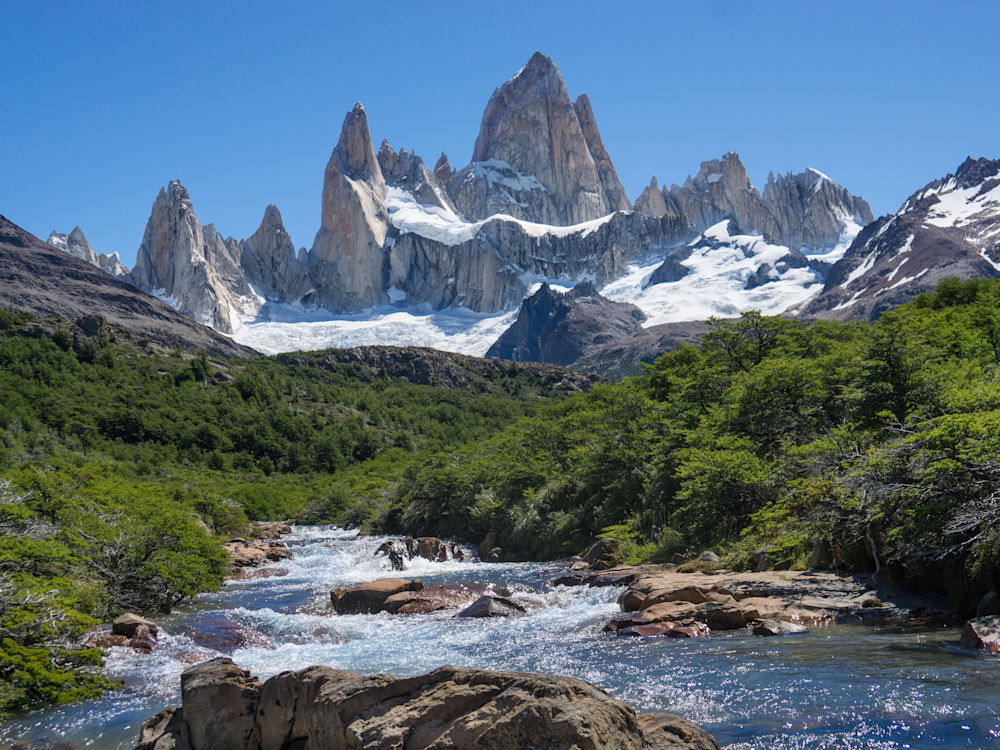
The beauty of Patagonia is how quickly the landscape changes around you.
One moment you’re walking through lenga forest with the wind moving through the branches. The next, the trail opens and there they are: granite towers, blue-white glaciers, lakes the color of polished stone, and valleys that seem to run all the way to the horizon.
We've been guiding guests in the wilds of Patagonia for decades and have found our favorite places. The best places to visit in Patagonia are Torres del Paine National Park in Chile, Los Glaciares National Park and Perito Moreno Glacier in Argentina, El Chaltén for hiking beneath Mount Fitz Roy, Northern Patagonia for lakes and forests, and Tierra del Fuego for wild southern landscapes near Ushuaia. If this is your first Patagonia adventure, start with the classic southern highlights: Torres del Paine, El Calafate, Perito Moreno Glacier, and El Chaltén. Together, they give you the full Patagonia feeling: mountains, glaciers, wildlife, big skies, and trails that stay with you long after your boots are clean again.
Patagonia stretches across southern Chile and Argentina, so choosing where to go can feel overwhelming at first. The secret is to match the place to the kind of experience you want: iconic hiking, glacier views, wildlife, quieter wilderness, softer nature walks, or a guided small-group adventure where the logistics are handled with care.
This guide walks through five of the best places to visit in Patagonia, what each one is best for, how hard the hiking can feel, when to go, where to stay, and why traveling with knowledgeable local guides can help you make the most of this wild, weather-shaped part of the world.
1. Torres del Paine National Park, Chile
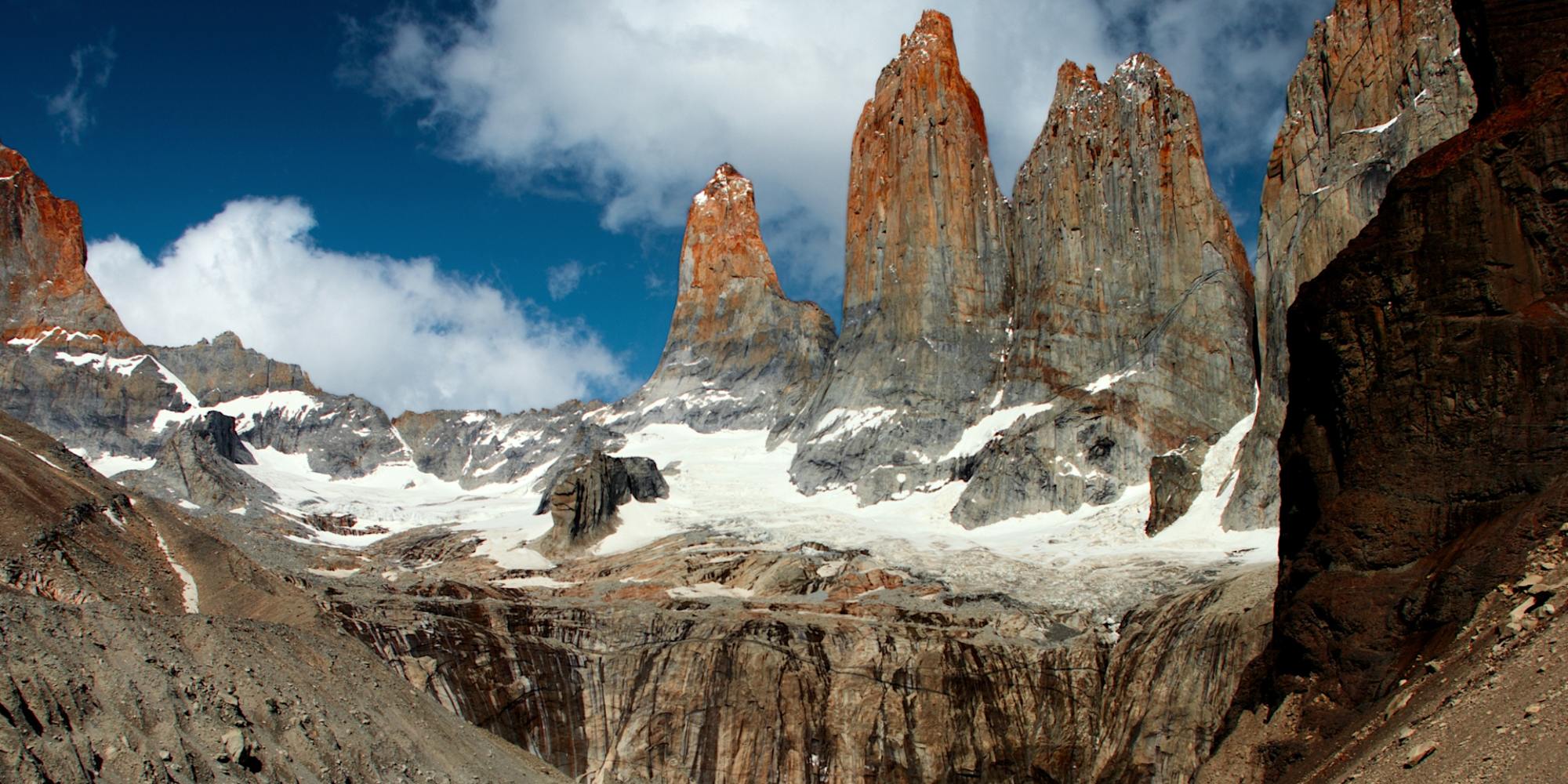
If you’ve seen one photograph of Patagonia, there’s a good chance it was taken in Torres del Paine.
This is Chilean Patagonia at its most dramatic: the three granite towers rising above glacial valleys, the dark horns of Los Cuernos, turquoise lakes, wind-brushed grasslands, and the shifting face of Grey Glacier. UNESCO describes the wider Torres del Paine Biosphere Reserve as a landscape between the Andes and the Patagonian steppe, with glaciers, waterfalls, rivers, lakes, and lagoons.
For hikers, Torres del Paine is one of the great adventure destinations of South America. The famous W Trek links several of the park’s most memorable landscapes, including the Base of the Towers, French Valley, Lake Nordenskjöld, and Grey Glacier. But you don’t need to be a mountaineer to experience the magic here. With the right itinerary, good pacing, and supportive guides, Torres del Paine can be challenging in all the right ways. Here's a closer look at the Torres del Paine and the W Trek in Patagonia.
Why visit Torres del Paine? Come for Patagonia’s most iconic mountain scenery, rewarding day hikes, glacier views, and the deep satisfaction of walking through a landscape you’ve dreamed about for years. Expect moderate to challenging hiking, with rocky sections, steady climbs, exposed ridgelines, and fast-changing weather. The distances are manageable for many active travelers, but the wind and terrain add a real sense of adventure.
The main hiking season runs from November through March, when daylight is longer and conditions are generally more reliable. Even in summer, bring waterproof layers, warm clothing, gloves, and a flexible mindset. Accommodation ranges from refugios and simple lodges to comfortable hotels and wilderness lodges near or inside the park.
This is where thoughtful guiding makes a huge difference. You’re not just following a trail. You’re learning when to pause for the view, how to move safely in the wind, where to look for condors or guanacos, and how to enjoy the day without worrying about the moving pieces behind the scenes.
Explore this breathtaking region on our 8-Day Torres del Paine Adventure.
2. El Calafate and Perito Moreno Glacier, Argentina
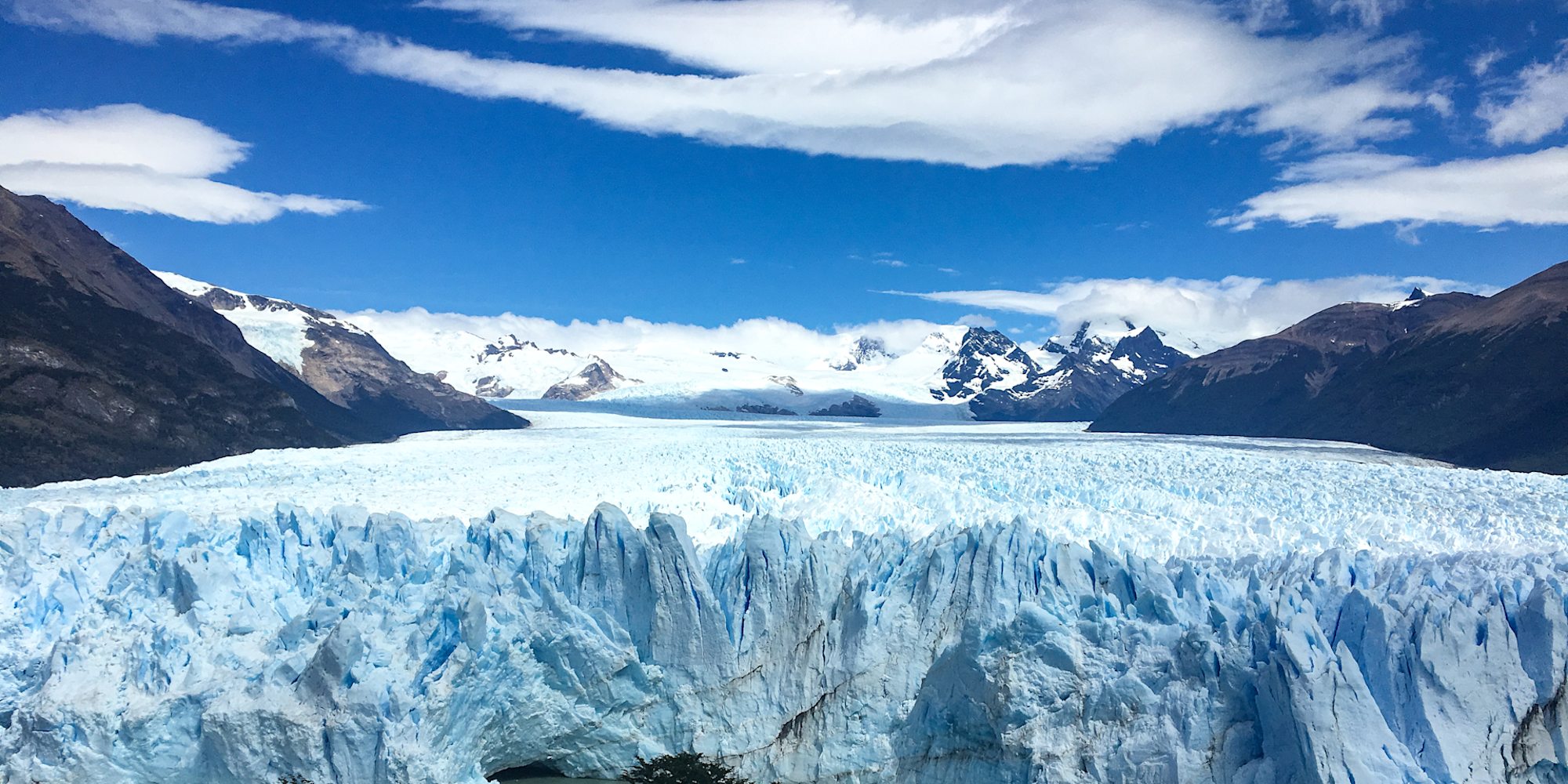
Perito Moreno Glacier is one of Patagonia’s great showstoppers.
You hear it before you fully understand it: a crack like thunder, a groan from deep inside the ice, then a splash as a piece of glacier calves into the milky water below. It’s not just a backdrop. It’s alive, moving and shifting in front of you.
Perito Moreno sits within Los Glaciares National Park, a UNESCO World Heritage Site in Argentine Patagonia. UNESCO notes that Los Glaciares covers 600,000 hectares and that glaciers cover roughly half of the World Heritage property. That scale is hard to imagine until you’re standing there with the cold air on your face, watching a wall of ice glow blue in the shifting light.
Why visit El Calafate and Perito Moreno Glacier? This is one of the most accessible glacier experiences in Patagonia. Boardwalks provide remarkable viewpoints, boat trips can take you closer to the glacier face, and some itineraries include guided ice trekking. It’s a wonderful option for travelers who want a huge natural moment without committing to a long, strenuous hike.
Most travelers spend one or two nights in El Calafate. That gives you enough time to visit Perito Moreno Glacier, enjoy the town, and connect onward to El Chaltén or Torres del Paine. If you’re wondering whether Perito Moreno is worth it when you’re already hiking elsewhere, the answer is yes. Torres del Paine gives you sweeping mountain drama. Perito Moreno gives you the raw power of ice up close.
Pack a warm layer, waterproof shell, hat, gloves, sunglasses, and a camera with a full battery. Even short walks on the viewing platforms can feel cold when the wind comes off the ice. This is one of those days where the pace matters. There’s joy in not rushing, in standing quietly, watching the light move across the glacier, and waiting for that next great crack of ice.
Experience the wonders of this epic glacier on our Patagonia Hiking Adventure.
3. El Chaltén and Mount Fitz Roy, Argentina
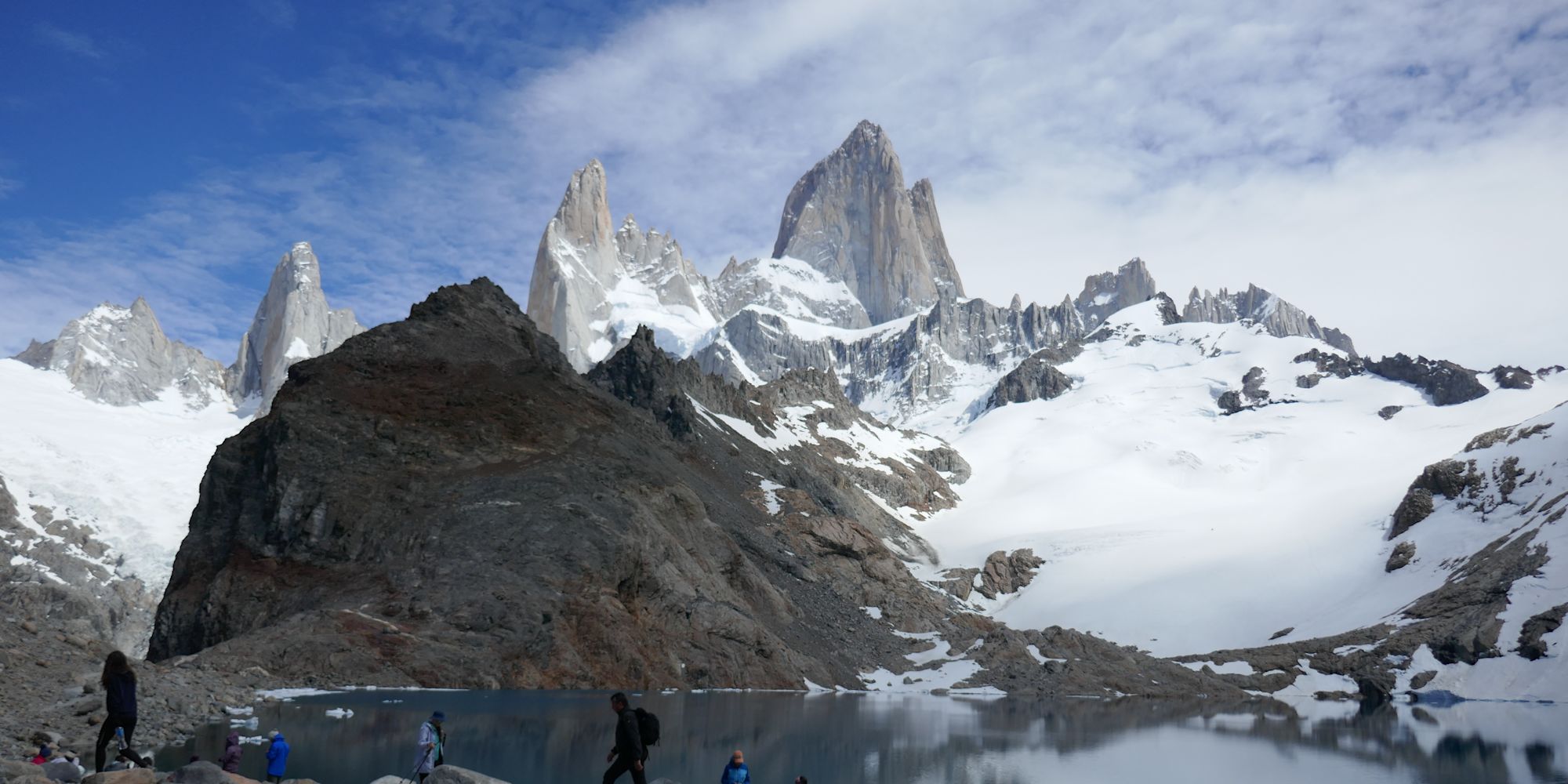
El Chaltén feels like a trailhead town in the best possible way.
Boots dry by doorways. Packs lean against café walls. Weather forecasts are discussed with the seriousness of fine art. And above it all, when the clouds allow, Mount Fitz Roy rises like a jagged stone flame.
This is one of the best places in Patagonia for active travelers who want big mountain views without needing technical climbing skills. The trails from town lead toward some of the region’s most celebrated viewpoints, including Laguna de los Tres and Laguna Torre. You can step out after breakfast, follow the path into forest and open valley, and feel the mountains pulling you onward.
Choose El Chaltén if you love day hiking, mountain photography, and the feeling of walking straight from a small town into wild country. The experience is simple in the best way: lace up, head out, and let the trail do the talking.
Hikes range from gentle viewpoints to full-day treks with steep, rocky final climbs. Laguna de los Tres, the classic Fitz Roy viewpoint, is a challenging day hike for most travelers, especially in wind or rain. Good fitness, broken-in boots, and trekking poles can make the day much more enjoyable.
Most travelers stay in El Chaltén village, where you’ll find guesthouses, lodges, restaurants, bakeries, and easy trail access. Accommodation is usually comfortable rather than polished, with the focus firmly on the mountains. November to March is the most popular hiking window, while March can be especially beautiful as autumn tones begin to touch the valleys.
This is a place where guide knowledge can turn a good hiking day into a great one. Weather shifts quickly. Sometimes the best decision is to start early. Sometimes it’s to wait for the clouds to lift over coffee, then head out when the mountains are ready.
Check out how to experience the ultimate itinerary on a 14 day Patagonia Hiking Adventure.
4. Northern Patagonia: lakes, forests, and quieter trails
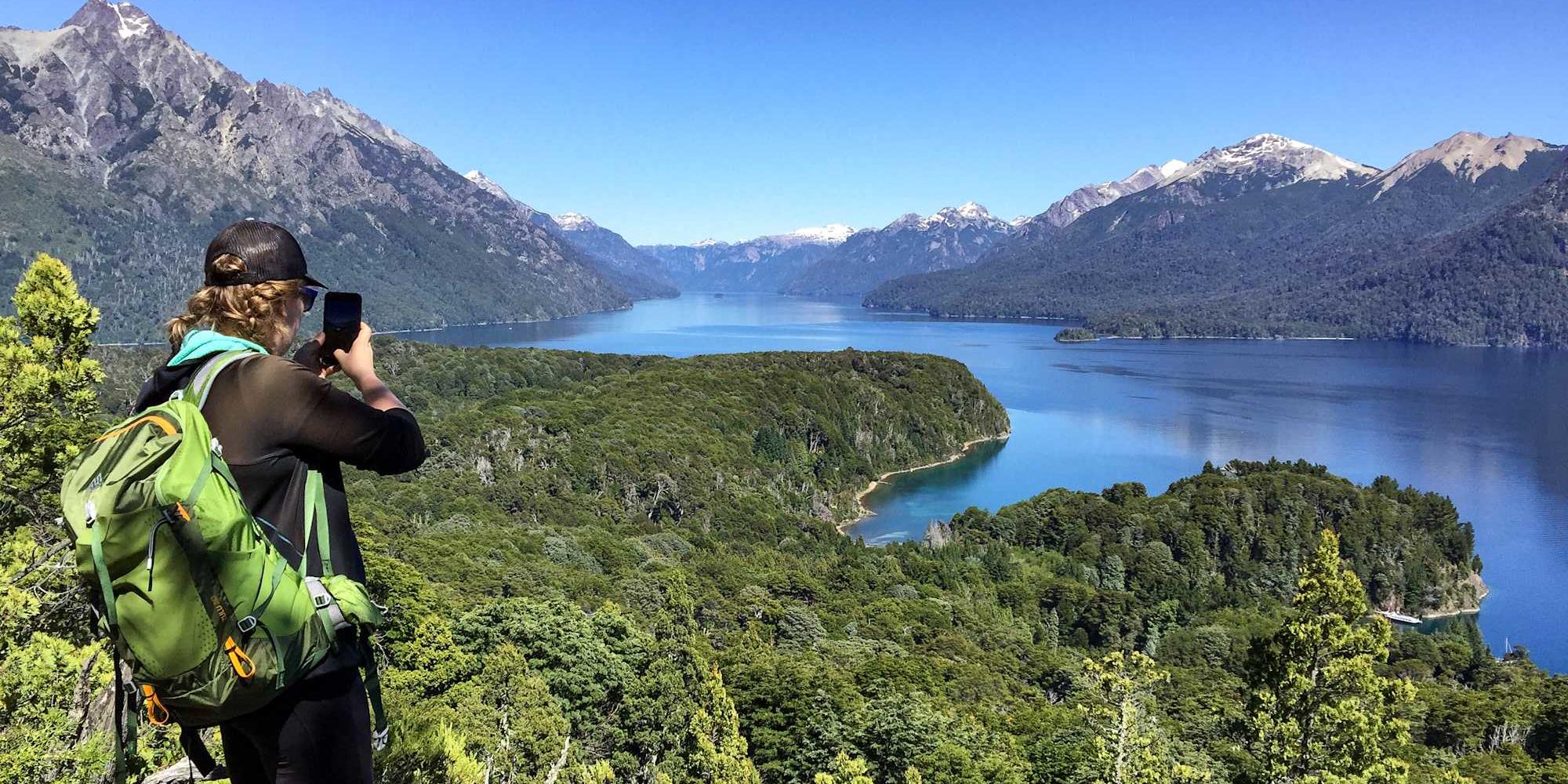
Not all of Patagonia is wind-whipped steppe and jagged ice.
Northern Patagonia is softer around the edges: a region of deep blue lakes, forested trails, volcanic peaks, alpine-style towns, and slower moments by the water. If southern Patagonia feels elemental and raw, northern Patagonia often feels more sheltered, green, and quietly generous.
Popular gateways include Bariloche and the Argentine Lake District, along with Chile’s northern Patagonian regions, where national parks, rivers, fjords, and forests create a different kind of adventure. This is where you might trade the famous towers for quiet lake views, kayak strokes, forest paths, and a rhythm that lets the place settle around you.
Choose Northern Patagonia if you want hiking, kayaking, lake scenery, forest trails, and mountain views with a gentler pace.
Take a look at our epic Northern Patagonia Adventure itinerary to see what you'll experience. It can be a wonderful fit for travelers who want active days but prefer a little more comfort, flexibility, or variety.
So, Northern Patagonia or Southern Patagonia? Southern Patagonia is best for iconic glaciers, Torres del Paine, Fitz Roy, and big mountain drama. Northern Patagonia is best for lakes, forests, volcanoes, scenic towns, and a softer introduction to the region. If you have time, pairing both gives you a richer understanding of Patagonia’s range.
Northern Patagonia suits travelers who want beauty, activity, and breathing room. It’s ideal if you love hiking but also appreciate a lakeside meal, a warm lodge, a scenic drive, or a day where the adventure unfolds gently rather than dramatically. You still get the thrill of the trail, but there’s also time to notice the smaller things: the smell of the forest after rain, the sound of water against a kayak, the way late light sits on the lake.
Read about Northern Patagonia versus Southern Patagonia and see what suits you best!
5. Tierra del Fuego and Ushuaia: the end of the world
At the far southern edge of Patagonia, Tierra del Fuego feels like a threshold.
Forests lean into the wind. Mountains fall toward the Beagle Channel. Boats head toward islands where seabirds gather. Ushuaia, often called the gateway to the end of the world, is the starting point for many Antarctic journeys, but it’s also a compelling Patagonia destination in its own right.
Tierra del Fuego National Park sits near Ushuaia on the southwestern tip of Tierra del Fuego Island. Patagonia Argentina notes that the park protects Patagonian forests and lies on the Beagle Channel near the city of Ushuaia.
Why visit Tierra del Fuego? Come for end-of-the-world atmosphere, coastal walks, forest trails, wildlife, history, and a sense of remoteness that feels different from the glacier-and-granite landscapes farther north. Two or three nights can give you time to explore the national park, take a Beagle Channel boat trip, and enjoy the town. More time allows for longer hikes or day trips into the surrounding valleys.
The hiking style is different from Torres del Paine or El Chaltén. Expect forest paths, coastal trails, muddy sections, lake views, and weather that can change quickly. It’s less about one famous viewpoint and more about feeling the wild southern edge of the continent.
Tierra del Fuego suits travelers with extra time, a love of remote places, or a desire to experience Patagonia from north to south. It also works beautifully before or after an Antarctica voyage. You don’t come here for ease. You come for the feeling of standing at the far end of things, wrapped in a jacket, watching the weather move across the water.
How to choose the right places in Patagonia for your trip
Patagonia is enormous, and one of the biggest planning mistakes is trying to do too much.
Distances are long. Weather can slow things down. Border crossings, internal flights, park permits, ferry schedules, and remote accommodation all need to line up. This is why many travelers choose a guided Patagonia adventure: not because they couldn’t travel independently, but because they want to spend their energy on the experience rather than the logistics.
For a first-time Patagonia trip, prioritize Torres del Paine, El Calafate, Perito Moreno Glacier, and El Chaltén. This combination gives you the strongest mix of hiking, glaciers, mountain views, and classic Patagonia landscapes. For the best hiking, choose Torres del Paine and El Chaltén. For the best glacier experience, choose Perito Moreno Glacier and Grey Glacier. For softer adventure and lake scenery, choose Northern Patagonia. For remote, end-of-the-world atmosphere, choose Tierra del Fuego and Ushuaia.
Look for an itinerary that includes local guides, well-paced hiking days, comfortable accommodation, most meals, internal logistics, park arrangements, and enough flexibility to respond to weather. The right trip should feel both adventurous and cared for: enough challenge to make the views meaningful, and enough support that you can be fully present while you’re there.
Patagonia rewards the traveler who gives it time. The best places aren’t just points on a map. They’re moments: the first glimpse of the Towers in morning light, the deep blue face of Perito Moreno Glacier, the crunch of gravel under your boots in El Chaltén, a quiet lake in Northern Patagonia, the wind at the edge of Tierra del Fuego.
You don’t need to see everything to have a life-shifting journey here. You need the right places, the right pace, and the right people beside you. Give Patagonia enough time, and it gives something back: confidence, wonder, perspective, and the kind of memories that rise up years later when you least expect them.
Got some questions about where in Patagonia you'd like to explore? Get in touch and we can steer in to an adventure to suit your preferences. In the meantime, here are some questions we get asked a lot that might help.
Frequently Asked Questions About Visiting Patagonia
What are the best places to visit in Patagonia for a first trip?
For a first trip, the best places to visit in Patagonia are Torres del Paine National Park, El Calafate, Perito Moreno Glacier, and El Chaltén. This route gives you iconic mountains, glaciers, hiking trails, wildlife, and strong travel connections between Chilean and Argentine Patagonia.
When is the best time to visit Patagonia?
The best time to visit Patagonia for hiking is generally November through March, when days are longer and conditions are usually better for active travel. Weather is still unpredictable, so pack warm layers, waterproof gear, gloves, and a hat even in summer.
How hard is hiking in Patagonia?
Patagonia hiking ranges from easy scenic walks to challenging full-day treks. Torres del Paine and El Chaltén include rocky trails, steep climbs, wind exposure, and long hiking days, so good fitness and preparation help.
Should I visit Patagonia independently or with a guide?
Independent travel can work well for confident travelers with time to manage logistics, but guided travel is often a better fit if you want seamless transfers, local knowledge, pre-arranged accommodation, meals, park logistics, and support on the trails.
What should I pack for Patagonia?
Pack layered hiking clothing, a waterproof jacket and pants, a warm fleece or insulated layer, broken-in hiking boots, gloves, beanie, sun protection, daypack, reusable water bottle, and trekking poles if you like extra stability.
Written by Nicole McLean, part of the Active Adventures team, with insight from a company that’s spent 30+ years creating guided adventure trips around the world.