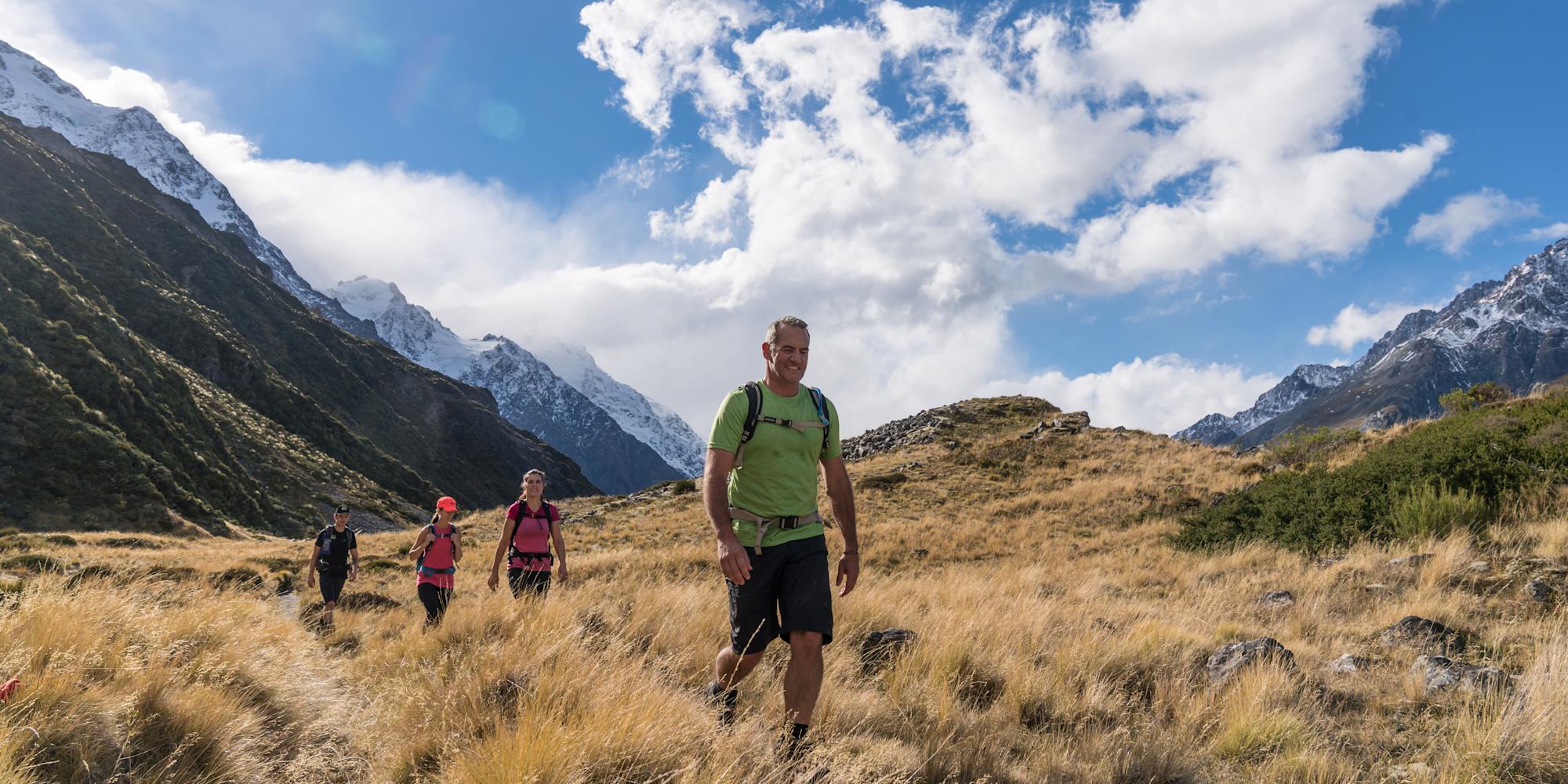
There’s a particular kind of morning that makes the South Island feel made for hiking.
You step onto the trail with cool air on your cheeks, the beech forest still damp from last night’s rain, and snow bright on the peaks above you. Somewhere ahead, a waterfall is making itself known before you can see it. By lunchtime, you might be standing above Lake Harris on the Routeburn Track, walking beside the clear coastal water of Abel Tasman, or looking toward Aoraki/Mount Cook with your jacket unzipped and the whole valley opening around you.
So, when is the best time to experience all that on foot?
The best time to visit the South Island of New Zealand for hiking is November through April, when the days are longer, alpine trails are generally more accessible, and the landscapes are alive with everything from spring waterfalls to golden fall light. Mid to late October can also be a wonderful early-season choice if you’re happy with cooler conditions, flexible plans, and the possibility of snow lingering on higher trails.
But here’s the lovely thing about the South Island: there isn’t just one “right” month.
In November, snow still clings to the high peaks above places like Aoraki/Mount Cook, Arthur’s Pass, and the Routeburn Track. In January, the long summer evenings stretch out like an invitation, whether you’re walking beside the clear waters of the Abel Tasman Coast Track, climbing through beech forest toward Key Summit, or standing beneath the granite walls of Milford Sound/Piopiotahi. By March and April, the trails grow quieter, the air turns crisp, and the hills around Wanaka, Queenstown, and Central Otago glow in shades of gold.
If you’re planning a hiking trip, your best season depends on what kind of trail days you’re dreaming of. Warm weather and maximum daylight? Choose summer. Fewer crowds and softer light? Look to spring or fall. Big alpine routes and Great Walks? Aim for the main hiking season from late spring through early fall.
In this blog, we’ll walk you through the best overall months to hike the South Island, what spring, summer, fall, and winter feel like on the trail, when to hike places like Milford Track, Routeburn Track, Kepler Track, Abel Tasman Coast Track, and Paparoa Track, what weather and terrain to expect, and why a guided South Island hiking trip can make the season feel smoother, safer, and more rewarding.
Lace up. The mountains are calling, and in New Zealand, they tend to call with a pretty spectacular "kiwi" accent.
Best overall months: November to April
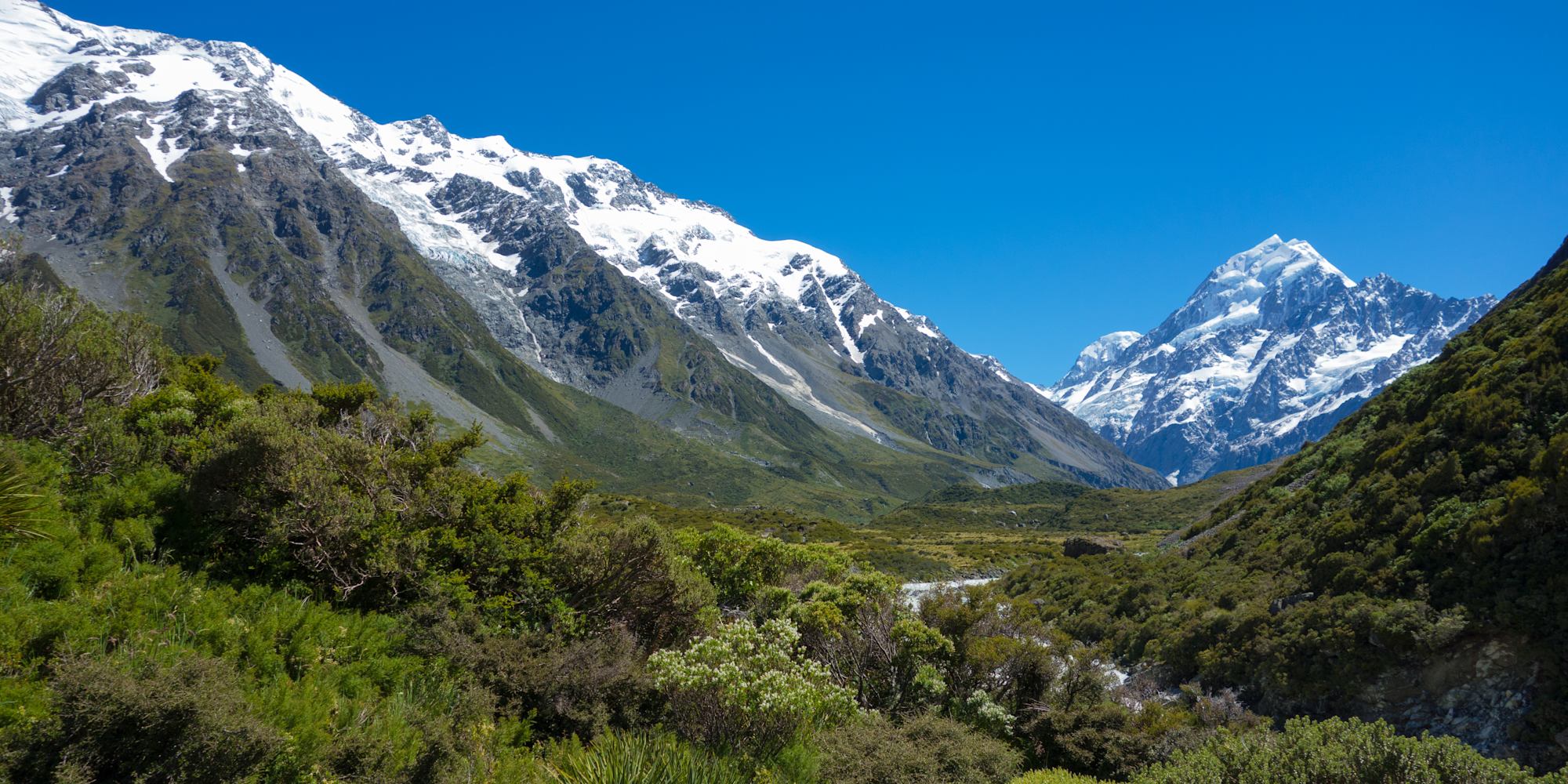
For most hikers, November through April is the most reliable window to visit the South Island. If you’re flexible and happy with cooler spring conditions, mid to late October can also be a beautiful early-season window, especially for lower-elevation walks, waterfalls, snow-capped views, and quieter trails.
From November to April, you’ll have the broadest choice of trails, more comfortable temperatures, and longer days to enjoy the views without feeling rushed. It’s also the main season for many of New Zealand’s iconic Great Walks, including the Milford Track, Routeburn Track, and Kepler Track in the south, the Abel Tasman Coast Track at the top of the island, and the newer Paparoa Track near the West Coast.
If you want the very best balance of good conditions and fewer crowds, look closely at late October, November, early December, March, and April.
Best months for hiking highlights
Mid to late October: Fresh spring energy, quieter trails, snow-capped peaks, and strong waterfalls, with more variable alpine conditions.
November: Fresh spring landscapes, full waterfalls, and snow still high above Lake Mackenzie, Mackinnon Pass, and the Humboldt Mountains.
Early December: Longer days before the busiest summer travel period, ideal for places like Routeburn Flats, The Divide, and Te Anau.
January and February: Warmest weather and maximum daylight for coastal and alpine trails, from Anchorage Bay to Aoraki/Mount Cook.
March: Comfortable hiking temperatures and fewer crowds on classic routes like the Kepler Track and Abel Tasman Coast Track.
April: Golden fall color, crisp mornings, and quieter trails around Queenstown, Wanaka, and Fiordland.
Who this season suits best
This hiking window suits travelers who want the classic South Island experience: mountain views, native forest, lake walks, alpine valleys, and time on the trail without having to navigate deep winter conditions.
It’s especially well suited to active travelers who like a comfortable pace, thoughtful logistics, and the reassurance of experienced local guides. The kind of guest who wants to feel challenged, cared for, and fully present in the landscape.
Still deciding which trails belong on your list? Start with our guide to the best South Island day hikes.
Spring: fresh trails, waterfalls, and snow-capped peaks
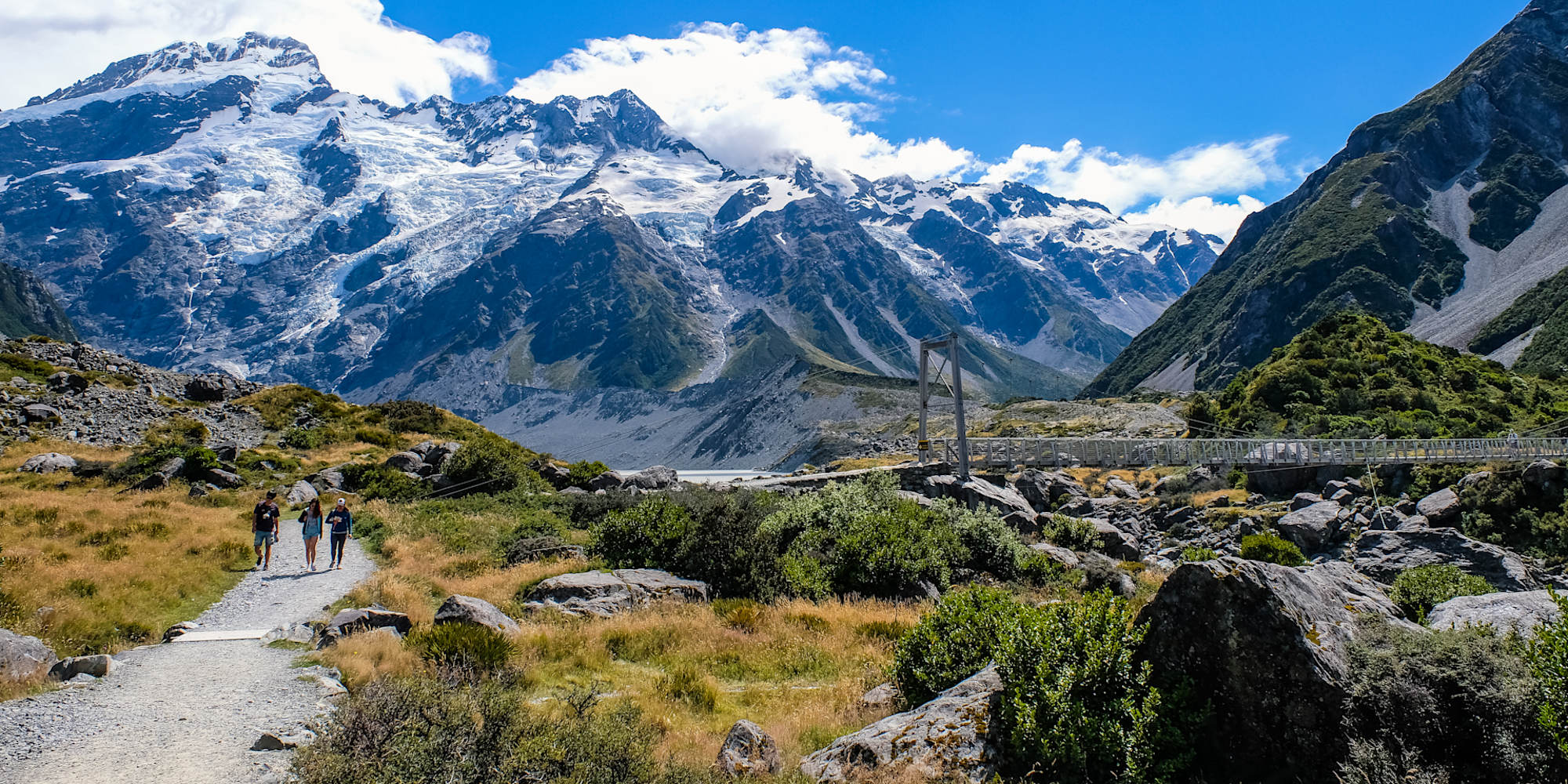
Spring in the South Island runs from September to November, but for hiking, mid October through November is usually the most appealing part of the season. By then, lower trails are coming alive, waterfalls are flowing, and the mountains still hold enough snow to make every viewpoint feel dramatic.
There’s a freshness to spring that’s hard to beat. The valleys are green, waterfalls are lively with snowmelt, and the mountains still wear their winter coats. On a clear day near Aoraki/Mount Cook, Lake Pukaki, or Wānaka, the contrast is stunning: bright sky, white peaks, blue water, and that cool mountain air that wakes you right up.
In Fiordland, spring can be especially dramatic. A Fiordland and Queenstown hiking trip is a wonderful way to experience this mix of rainforest, lakes, alpine views, and local guide support. Water streams down the cliffs around Milford Sound/Piopiotahi, the forests near Lake Te Anau feel newly washed, and the first sections of the Kepler Track and Routeburn Track begin to feel alive again after winter.
Spring is a wonderful time if you like quieter trails and don’t mind a bit of weather variety. You may get sunshine, rain, wind, and crisp alpine temperatures all in the same week. That’s not a flaw in the South Island experience — it’s part of its character.
Spring hiking highlights
Fresh, green landscapes around Te Anau, Glenorchy, and Wānaka.
Strong waterfalls in Fiordland, especially near Milford Sound/Piopiotahi and the Milford Track.
Snow-capped views above Routeburn Saddle, Mackinnon Pass, and the Southern Alps.
Fewer crowds than peak summer.
Cooler hiking temperatures.
What to keep in mind
Early spring can still feel wintry on higher routes. Some alpine trails may have snow, ice, or access issues, especially before late October or November. If your dream is to hike big alpine tracks like the Milford Track, Routeburn Track, or Kepler Track, November through April is usually the more dependable window.
Spring is also a season where guided flexibility helps. In late October, a good guide knows when to start early, when to wait out weather, and when to swap in a lower-elevation walk near Lake Te Anau, Glenorchy, Abel Tasman, or Arrowtown that still gives you a brilliant day outside.
Summer: long days, warm weather, and classic South Island hiking
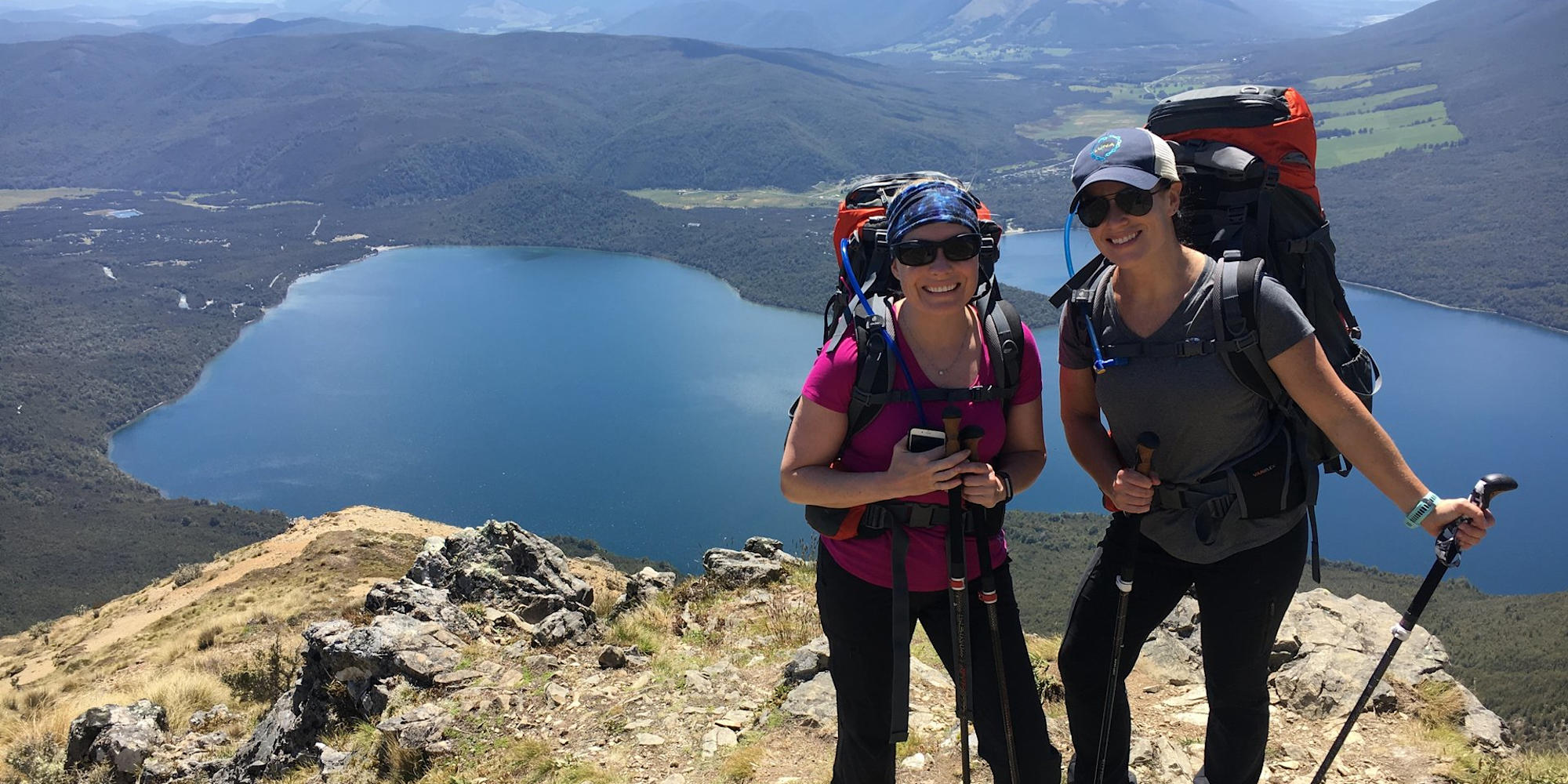
Summer, from December to February, is the South Island’s peak hiking season. The days are long, the weather is warmer, and there’s a real sense of energy in places like Queenstown, Wanaka, Abel Tasman, Te Anau, and Glenorchy.
This is the season for big trail days. You can start early, take your time on the climb, linger over lunch at a viewpoint, and still have daylight left for a lakeside wander or a well-earned dinner.
In Abel Tasman National Park, summer means golden beaches, clear coastal water, and forested headlands along the Abel Tasman Coast Track, from Marahau toward places like Anchorage, Bark Bay, and Awaroa. In Aoraki/Mount Cook National Park, it means wide-open alpine views and glacier-carved valleys. In Fiordland, it means rainforest, waterfalls, and dramatic trail days around the Milford Track, Kepler Track, and the Routeburn Track.
It’s popular for a reason.
Summer hiking highlights
Warmest weather of the year.
Long daylight hours.
Best access to a wide range of trails.
Great conditions for coastal walks around Torrent Bay, Awaroa, and Totaranui.
Alpine views near Routeburn Falls, Lake Harris, and Key Summit.
Lively atmosphere in South Island towns.
What to keep in mind
Summer is also the busiest season. Accommodation, guided trips, Great Walk huts, and popular activities can book out well in advance, especially around Christmas and New Year.
You’ll also want to be ready for strong sun, changeable mountain weather, and sandflies in places like Milford Sound/Piopiotahi, the Hollyford Valley, and the West Coast. A good rain jacket, sun protection, and a sense of humor will all earn their place in your pack.
If you want summer-like access with a little more breathing room, aim for early December or late February. If you’re comfortable with cooler temperatures and a more flexible plan, mid to late October can also be a rewarding shoulder-season choice.
Fall: golden light, quieter trails, and crisp mountain air
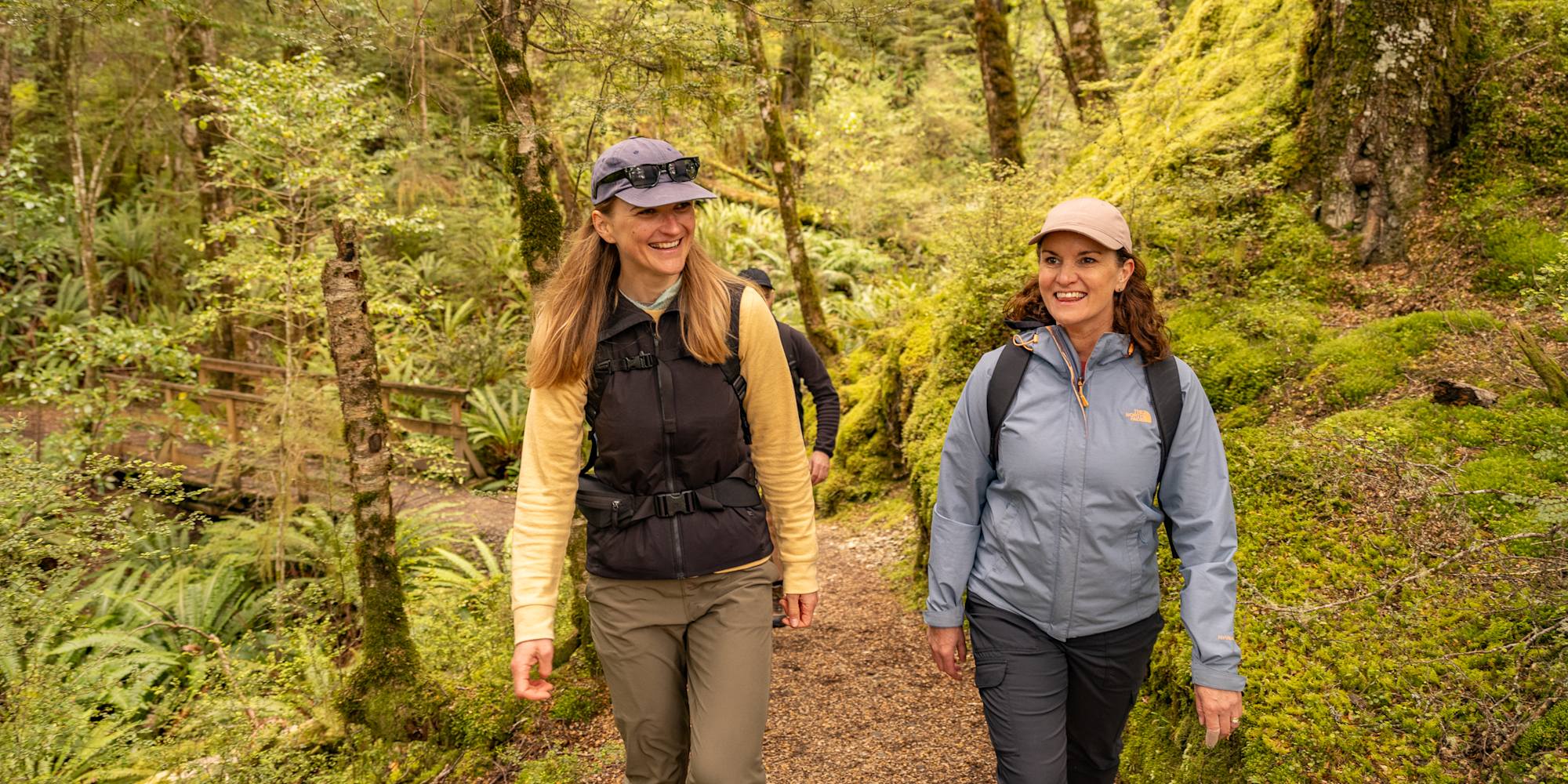
Fall, from March to May, may be the South Island’s most quietly beautiful hiking season. For many hikers, March and April are the sweet spot.
By March, the busiest summer period has eased, but the days are still long enough for rewarding hikes. The temperatures are often comfortable for walking, and the landscapes begin to soften into autumn. Around Arrowtown, Wanaka, Queenstown, and Central Otago, the trees turn gold and copper. The air feels clearer. The light sits lower. Everything seems to slow down in the best possible way.
It’s also a lovely time to walk sections of the Kepler Track above Lake Te Anau, explore the valleys around Glenorchy and the Routeburn Shelter, or enjoy the coastal rhythm of the Abel Tasman Coast Track once the peak summer rush has passed. If you prefer gentler trail days and time to settle into each place, a New Zealand walking trip at a relaxed pace may be the best fit.
This is the season for travelers who don’t need the hottest weather. They want space, color, and that satisfying feeling of walking through a landscape that’s settling into itself.
Fall hiking highlights
Quieter trails after peak summer.
Comfortable daytime hiking temperatures.
Beautiful fall color in Arrowtown, Wānaka, and Central Otago.
Softer light for photography around Lake Wakatipu, Lake Te Anau, and Lake Pukaki.
A calmer pace in popular destinations.
Excellent conditions for many lower and mid-elevation walks.
What to keep in mind
By April, mornings and evenings can be cool, especially in alpine areas. By May, winter conditions begin to creep into higher places, and daylight is noticeably shorter.
For most hiking-focused trips, March and April are stronger choices than May. Pack warm layers, gloves, and a beanie. The small comforts matter when you’re standing above Lake Harris, looking toward the peaks of Mount Aspiring National Park, with a cool breeze on your cheeks and the whole valley spread out below.
Winter: beautiful, quiet, and more limited for hiking
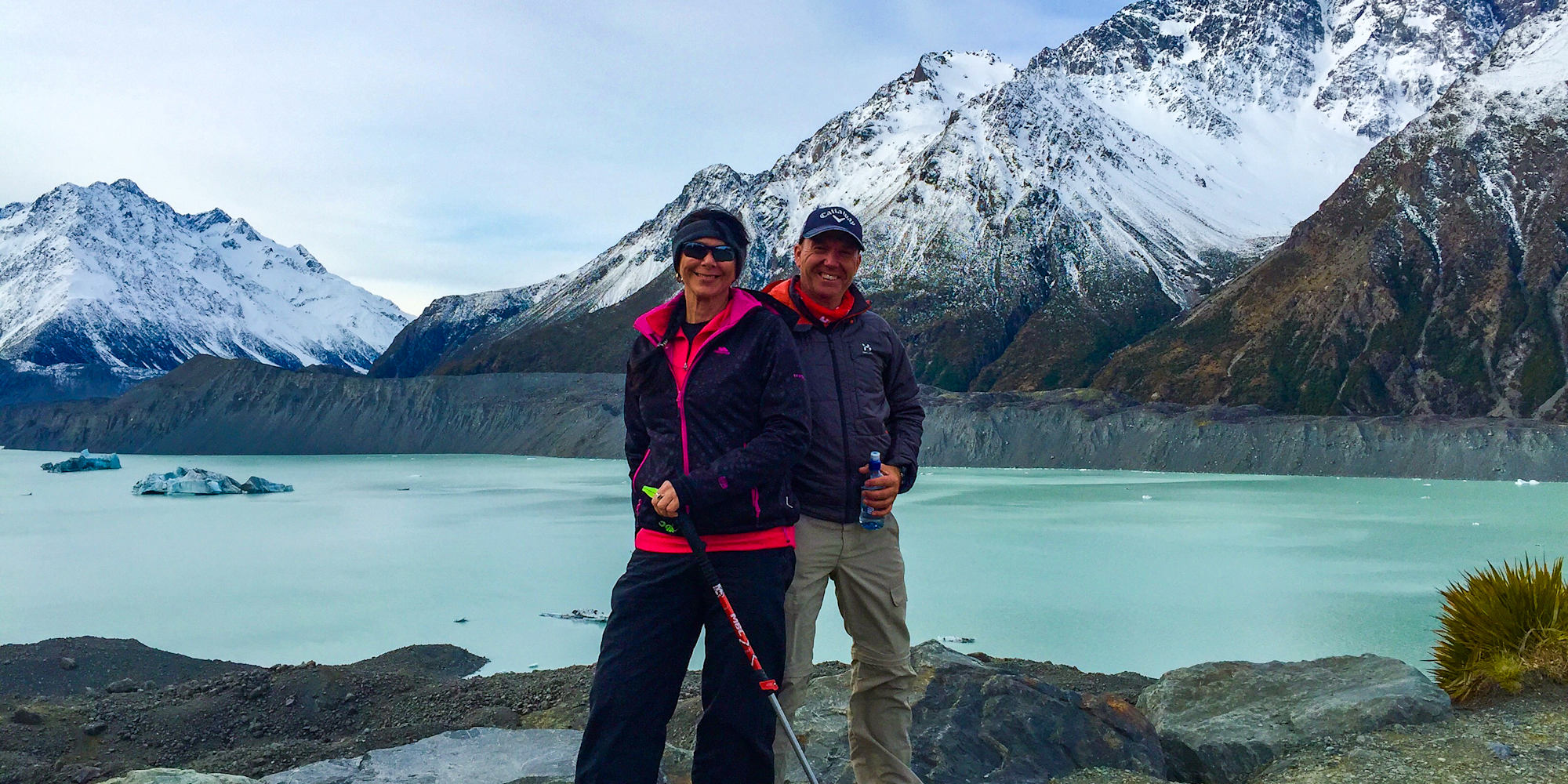
Winter runs from June to August, and while the South Island is spectacular under snow, it’s not the best season for most hiking-focused trips.
This is when the Southern Alps/Kā Tiritiri o te Moana feel especially dramatic. Queenstown and Wānaka become winter bases, the mountains turn white, and clear cold days can be absolutely beautiful. Lower-elevation walks may still be possible in some areas, especially around lakes, coastlines, and sheltered tracks.
But alpine hiking is a different story. Snow, ice, avalanche risk, short daylight, and fast-changing weather make many higher trails suitable only for experienced, well-equipped winter hikers. Areas around Mackinnon Pass on the Milford Track, Routeburn Saddle, Harris Saddle, and the exposed tops of the Kepler Track can involve serious winter conditions outside the main Great Walks season.
Winter hiking highlights
Snowy mountain views.
Quieter travel period.
Beautiful short walks around Queenstown, Wānaka, Lake Tekapo, and Te Anau.
Good option for combining sightseeing with skiing or winter travel.
What to keep in mind
If hiking is the main reason for your South Island trip, winter is usually not the ideal time to come. You’ll have fewer trail options and more weather-related limitations.
That said, winter can still be rewarding if you’re planning scenic walks, cozy accommodation, and time in places like Queenstown, Wānaka, Tekapo, or Te Anau. Just keep your hiking ambitions realistic and let safety lead the way.
Why a guided South Island hiking trip fits the season so well
The South Island rewards good planning. Weather shifts quickly, trail conditions vary by region, and some of the best days come from knowing when to adjust the plan.
That’s where a guided trip makes a real difference.
On an Active Adventures South Island trip, you’re not spending your evenings piecing together transport from Queenstown to Te Anau, checking track updates for the Routeburn Track, comparing accommodation near Aoraki/Mount Cook, or wondering whether tomorrow’s hike is the right choice for the forecast. You’re free to relax and soak up every moment without any logistics worries.
Your guides know the trails, the weather patterns, the quiet viewpoints, the best picnic spots, and when everyone might need a little encouragement, or a very good snack. They know when Key Summit is worth the early start, when the forest around Lake Manapouri is glowing after rain, and when a lower trail near Glenorchy will give you a better day than pushing higher into cloud.
You’ll travel in a small group, with the big logistics taken care of and plenty of heart in the small details.
Guided South Island hiking highlights
Local guides who understand the terrain and conditions.
Seamless transport between hiking regions like Queenstown, Te Anau, Aoraki/Mount Cook, and Abel Tasman.
Carefully chosen accommodation.
Small-group travel with like-minded adventurers.
Flexible daily planning around weather and group pace.
Support on varied terrain, from beech forest and coastal tracks to alpine viewpoints.
For travelers who want a fuller journey across the South Island landscapes, a 14-day South Island adventure can bring together alpine trails, lakes, rainforest, and coastal walking with the logistics handled.
If you want a shorter South Island hiking and biking trip, you can still experience the island’s big variety without committing to a longer itinerary.
So, when should you hike the South Island?
For most travelers, the best time to hike New Zealand’s South Island is November through April. If you’re flexible, mid to late October can also be a beautiful early-season option, especially for quieter lower-elevation trails, waterfalls, and snow-capped views.
Choose mid to late October if you want fresh spring energy and can travel with a flexible plan. Choose November or early December for spring landscapes, snow-capped peaks, and fewer crowds before peak summer. Choose January or February for warmth, long days, and the fullest range of hiking options. Choose March or April for golden light, cooler walking temperatures, and quieter trails.
There’s no single perfect month for everyone. The right time is the one that matches the kind of journey you want to have.
Maybe that’s a summer morning on the Abel Tasman Coast Track, walking from Anchorage toward Bark Bay with salt in the air. Maybe it’s a fall afternoon above Lake Wanaka, with golden hills rolling away beneath you. Maybe it’s a spring day near Milford Sound/Piopiotahi, where waterfalls pour from the cliffs and the forest smells alive after rain. Or maybe it’s the simple thrill of standing at Key Summit, looking out across folded valleys and knowing your boots carried you there.
Whenever you come, come prepared for variety. The South Island has a way of giving you sunshine, mist, wind, stillness, and awe — sometimes all before lunch.
And that’s part of the magic.
You don’t just visit the South Island for the hiking. You come for the feeling of being small in a big landscape, looked after in the right ways, and reminded that adventure still has plenty to show you.
Written by Nicole McLean, part of the Active Adventures team, drawing on the company’s New Zealand roots and 30+ years of experience guiding travelers through wild, beautiful places.